
Jump To Section
- 1 Why These Telecom Design Trends Will Matter for Growth and Retention in 2026
- 2 Trend #1: Designing for Continuity Across Channels
- 3 Trend #2: Turning Predictive AI into Simple Human Value
- 4 Trend #3: Designing for Control, Not Dependence
- 5 Trend #4: Accessibility and Performance as Competitive Advantages
- 6 Trend #5: Emotional Design that Humanizes Utility
- 7 Experience Orchestration: Designing for Clarity at Scale
- 8 Final Takeaways: The New Design North Star for Telecom
- 9 FAQs
Telecom customers today are overwhelmed by disconnected digital experiences: multiple apps, inconsistent billing systems, chatbots that don’t talk to live agents, and complex plan structures. Even when the network performs flawlessly, poor experience design erodes trust and loyalty.
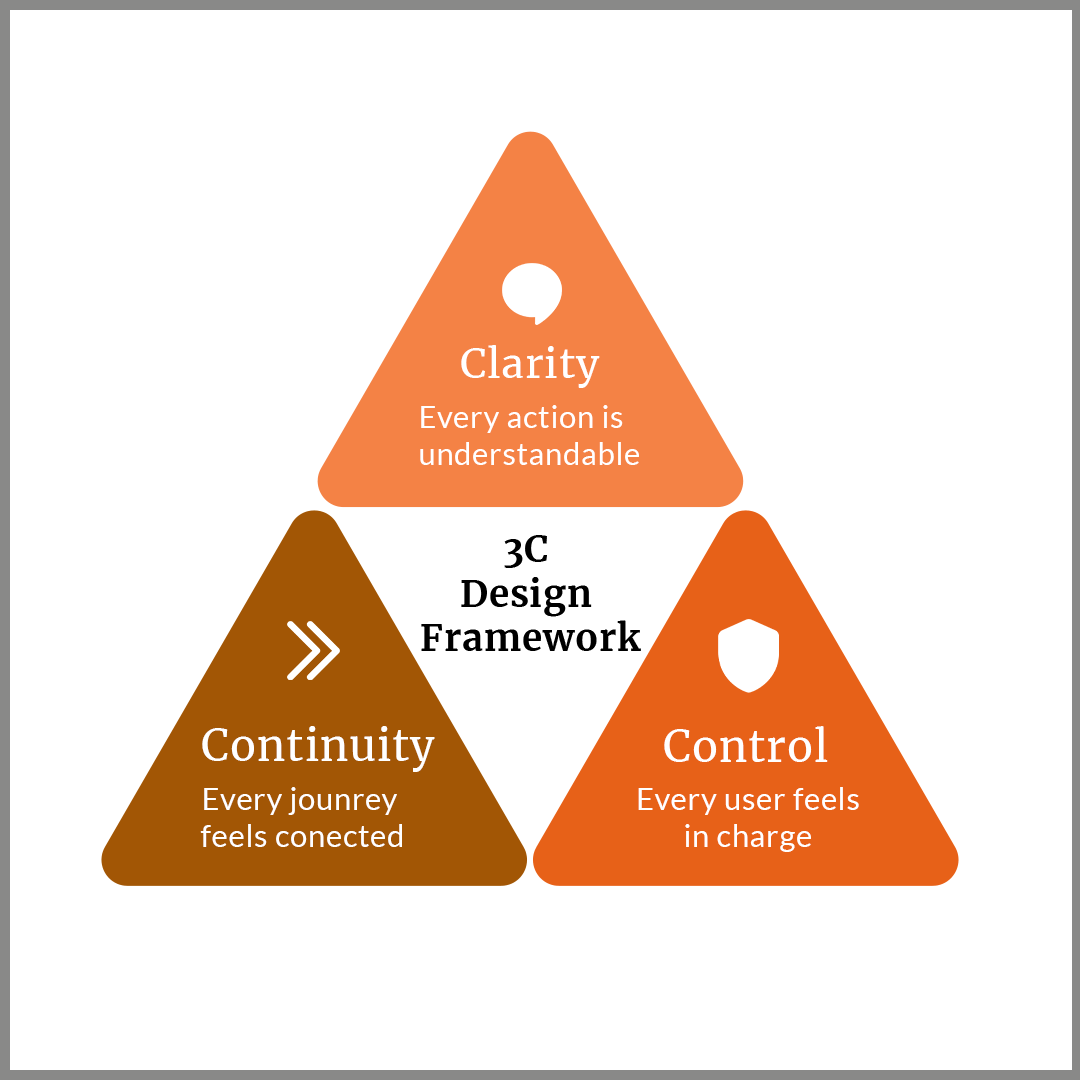
In 2026, the next wave of telecom innovation won’t be driven by faster speeds or lower prices, but by experience coherence. The best strategy design can deliver is the 3Cs: clarity, continuity, and control at every interaction.
In order to emerge as leaders in the upcoming year, telecom operators must move beyond UI design to experience architecture, orchestrating frictionless journeys that feel intelligent, connected, and human.
Deriving insights from first-hand experience with telecom companies, in this article, we explore the design shift from “How do we make this screen prettier?” to “How do we remove friction from end-to-end journeys, connect siloed systems, and give customers confidence that everything just works, wherever they show up?”
Why These Telecom Design Trends Will Matter for Growth and Retention in 2026
Design is emerging as the telecom industry’s most critical growth driver, improving retention, reducing call volumes, and strengthening brand differentiation.
By 2026, telecom design strategy must focus on eliminating friction, creating continuity across channels, and giving users transparent control over their experience. New changes can’t be disruptive experiments; they must be grounded in measurable impact on churn, NPS, digital self-serve completion, and call-center volume.
Design is how you compete with scale. Most carriers offer comparable networks and price points. The deciding factor for many customers is:
- How easy it is to understand their plan and bill.
- How quickly they can resolve an issue without repeating their story.
- How confident they feel that the service will “just work” across channels and devices.
The 3Cs offer a simple but powerful design north star for growth:
- Clarity reduces confusion, disputes, and billing-related churn.
- Continuity removes handoff friction and lowers cost-to-serve.
- Control increases digital adoption and reduces reliance on high-cost support channels.
The rest of this article looks at how these 3Cs show up across key design trends in telecom and how leaders can turn them into day-to-day reality in 2026.
Trend #1: Designing for Continuity Across Channels
Think of it this way: telecom companies (like your phone carrier) can’t just have separate apps, websites, stores, and customer service lines that don’t talk to each other anymore.
Customers want one cohesive experience no matter how they’re reaching out, whether that’s through the mobile app, the website, walking into a store, or calling support.
In 2026, leading telecoms will replace channel fragmentation with experience continuity, powered by shared APIs, unified component libraries, and synchronized customer data. A customer starting a device upgrade in the app should be able to complete it in-store without losing context or repeating information.
This connected experience isn’t just a tech thing anymore; it’s become a core design goal. When done right, it makes customers feel more confident, saves them time, and means they don’t have to constantly call customer support for help.
For telecom leaders, continuity should show up in concrete design choices such as:
- Single customer story across channels: one view of orders, tickets, devices, and plans, visible to agents and customers alike.
- Shared interaction patterns: similar navigation, language, and flows across app, web, and in-store tablets so customers never need to “re-learn” the experience.
- Stateful journeys: a cart, application, or trouble ticket started in one channel can be resumed in another without restarting.
- Unified notifications: a consistent feed of updates (billing, outages, orders) across channels instead of fragmented emails, texts, and in-app alerts.
Designing for continuity is where Clarity and Continuity meet: customers know exactly where they are in a journey, and they can pick it up from anywhere without friction.
Trend #2: Turning Predictive AI into Simple Human Value
AI will be embedded in every telecom interaction by 2026, but design determines whether it feels helpful or intrusive.
Many customers are increasingly open to AI assistance for simple tasks, as long as it saves them time and doesn’t block access to a human when they need it.
The key is explainable automation. Predictive UX should show customers why an alert or recommendation appears, not just what to do about it. For example:
- “You’ve reached 80 percent of your data limit. Here’s how to prevent slowdown.”
- “We detected slower signal strength in your area — rerouting to an alternate tower.”
When AI acts transparently and predictably, it earns trust. When it hides behind complexity, it breeds confusion.
Design must bridge that gap. Omnichannel continuity is critical; handoffs from bot to human must carry full context so customers never repeat themselves.
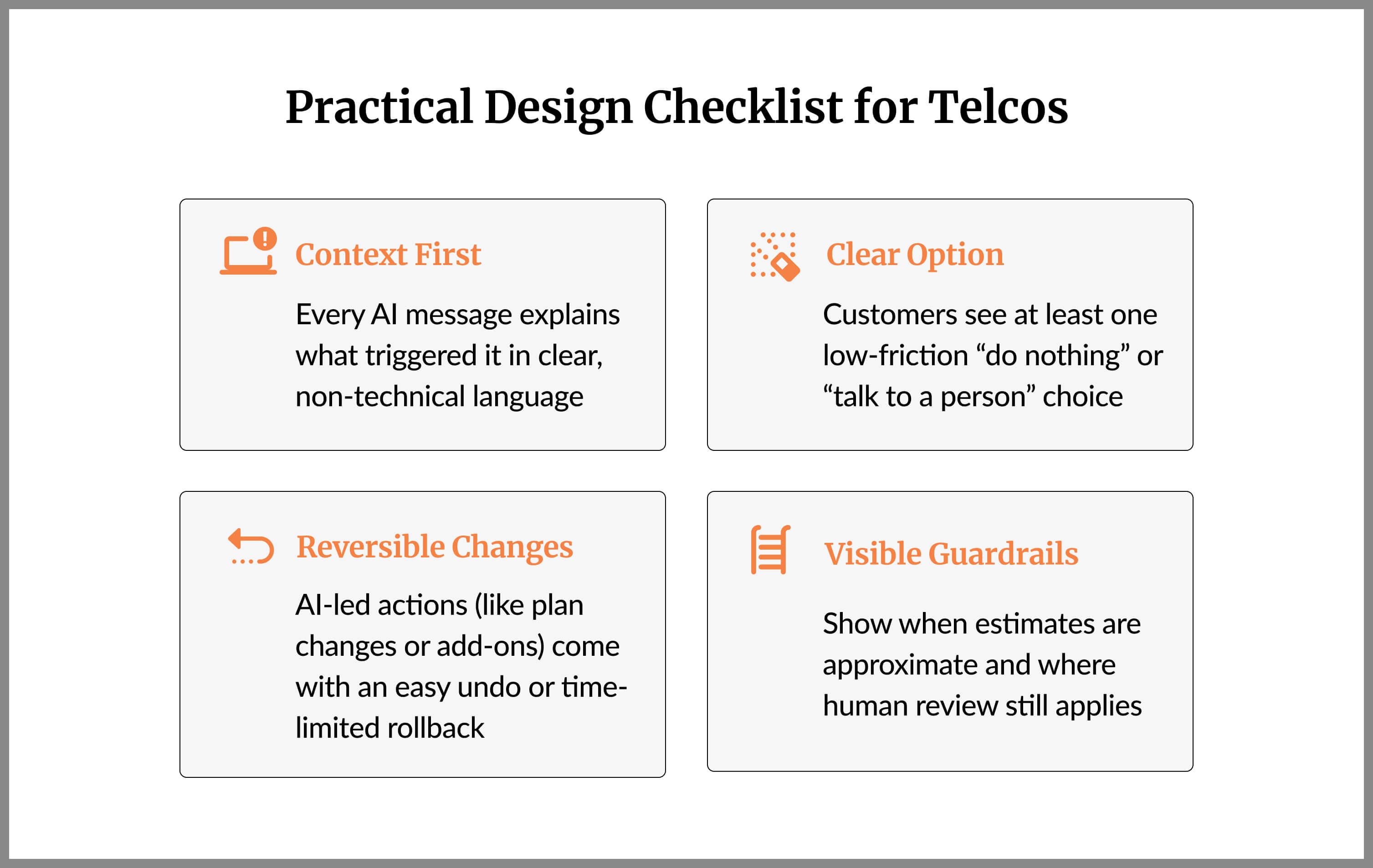
A practical design checklist for AI in telecom might include:
- Context first: every AI message explains what triggered it in clear, non-technical language.
- Clear options: customers see at least one low-friction “do nothing” or “talk to a person” choice.
- Reversible changes: AI-led actions (like plan changes or add-ons) come with an easy “undo” or time-limited rollback.
- Visible guardrails: show when estimates are approximate and where human review still applies (for billing disputes, fraud, or credit decisions).
Design must feel emotionally intelligent, transparent, and inclusive, with configurable UI and accessibility by default. While lots of organizations are rushing to implement AI, those who consider customer satisfaction, trust, and equity alongside innovation are the ones most likely to become the industry’s leaders. This human-centered design playbook helps organizations convert the user experience into an ROI contributor.
The question for every AI feature should be: What clear, human value is this bringing to the client?
Trend #3: Designing for Control, Not Dependence
Telecom customers want autonomy, but they don’t want to feel abandoned in self-service loops.
2026 will mark a shift toward empowered self-management:
- Transparent dashboards for billing, usage, and plan control.
- Clear “approve” or “undo” options for AI-led actions.
- Adaptive flows that escalate seamlessly to human support when needed.
Good design restores a sense of control: reducing both anxiety and call-centre load, while improving satisfaction.
For example, a redesigned plan-change journey might:
- Simulate the bill impact before customers commit.
- Show when the change takes effect and how long they can switch back.
- Provide a clear “Talk to an expert” option at key decision points.
Control is where all three Cs converge: clarity about the implications of choices, continuity so changes propagate across systems without surprises, and control so the customer never feels trapped by the technology that is supposed to serve them.
Trend #4: Accessibility and Performance as Competitive Advantages
Accessibility and performance are no longer optional checkboxes; they’re competitive differentiators.
As telecoms serve increasingly diverse digital audiences, they’ll standardize on:
- WCAG-compliant contrast and text scaling.
- Keyboard and voice navigation parity.
- Performance budgets that guarantee low-latency app and web experiences.
Every millisecond of delay or barrier to access translates to customer frustration. By 2026, accessibility and speed will directly influence brand equity and NPS.
For telecom companies, this also means designing for:
- Customers on older or lower-end devices that still dominate many markets.
- Rural and low-bandwidth environments where apps must degrade gracefully.
- Seniors, newcomers, and non-native speakers who may rely heavily on clear language, larger text, and assistive technologies.
When accessibility and performance are built into the design system, not bolted on at the end, they quietly reinforce the brand promise: “You can rely on us.”
Trend #5: Emotional Design that Humanizes Utility
Telecom is often viewed as transactional, until something goes wrong. Emotional design can transform those high-friction moments into opportunities for connection.
In 2026, telcos will invest in tone, micro interactions, and branded AI personas to bring empathy into digital utility. Whether it’s a proactive outage apology or a friendly AI assistant that remembers preferences, emotional design makes experiences feel personal — even at scale.
This might look like:
- Messages that acknowledge the customer’s situation and effort: “We know this is frustrating, here’s what we’re doing and when you can expect an update.”
- Thoughtful microcopy around high-stress flows like missed payments, roaming charges, or service interruptions.
- Subtle animations and micro interactions that confirm actions, reduce uncertainty, and make complex tasks feel approachable rather than intimidating.
In a category where most experiences still feel cold and transactional, emotional design becomes a surprisingly powerful differentiator, especially when it reinforces clarity and control in the moments customers remember most.
Experience Orchestration: Designing for Clarity at Scale
Traditional experience design focused primarily on individual touchpoints: designing interfaces, optimizing customer service interactions, or improving specific digital channels.
The telcos that win in 2026 will:
- Simplify every workflow down to the essentials.
- Connect every system so customers never repeat a step.
- Align every design decision to one principle: make it easier than before.
More than just adding touchpoints, it’s about connecting them into a single, cohesive brand experience. This is integrating service design to better connect omnichannel experiences for customers.
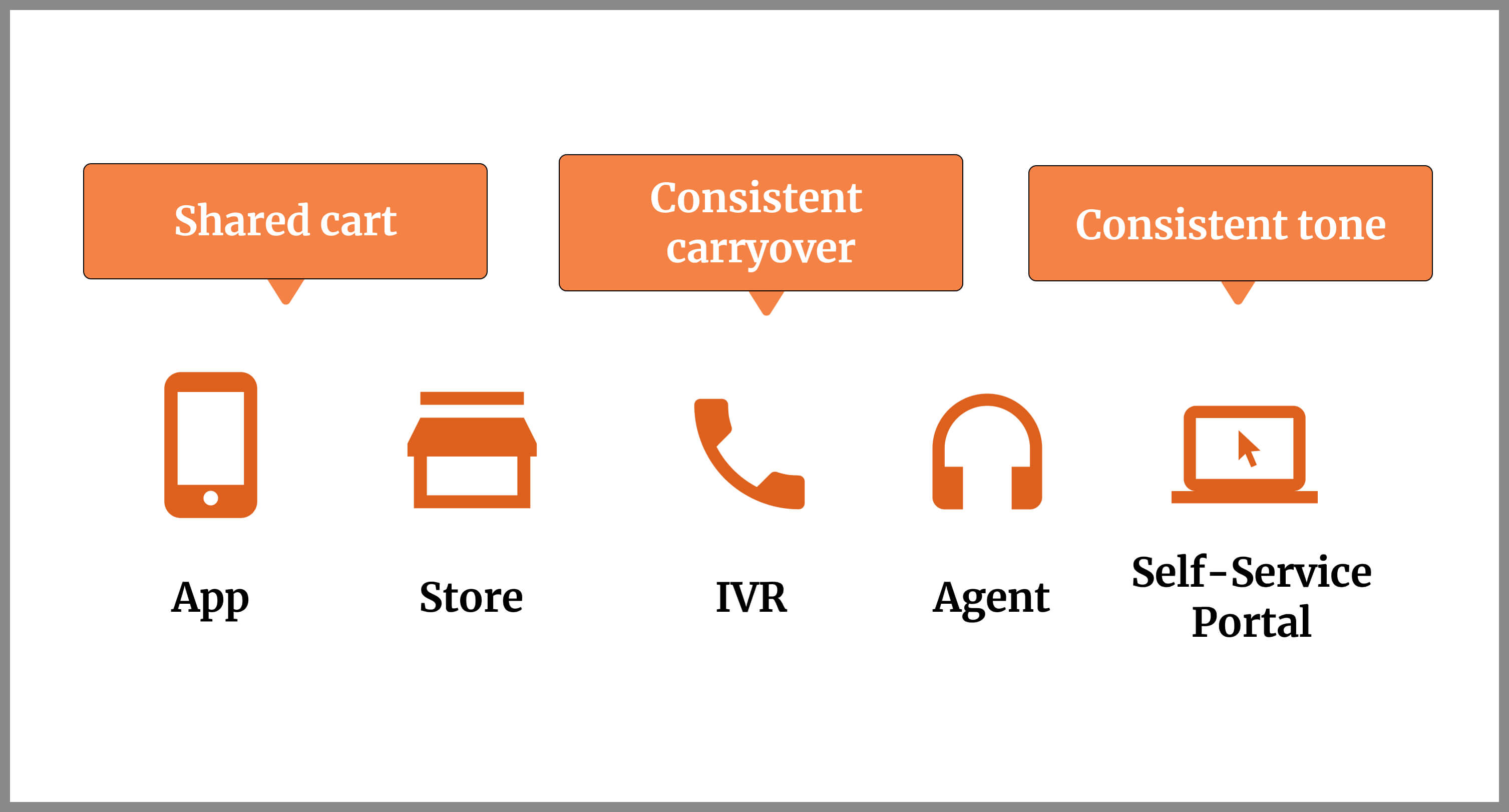
Experience orchestration often means bringing design, product, operations, data, and customer care to the same table. It requires service blueprints that map:
- Front-stage journeys across app, web, store, IVR, and live agents.
- Back-stage systems like CRM, billing, order management, and network operations.
- Handshakes and handoffs where things most often break today.
We often see how “UX issues” are really orchestration issues. When design is empowered to work at the service level, not just the screen level, clarity stops being a slogan and becomes a measurable operating principle.
Final Takeaways: The New Design North Star for Telecom
In 2026, the most powerful telecom design strategy will be the simplest one:
- Clarity: make every action and choice self-evident.
- Continuity: ensure every experience feels connected, not compartmentalized.
- Control: empower customers with transparency and autonomy.
Telecom services are inherently complex, involving network infrastructure, multiple service tiers, bundled offerings, and long-term customer relationships. When all these pieces don’t work together, customers get annoyed and have to tell their story multiple times to different customer service reps, re-enter the same information on different websites, or get conflicting answers about their account.
Service design can connect those dots. It’s like creating a blueprint that makes sure when you start something on the mobile app, the website knows about it, and the customer service person can see it, too. The customer expects real-time interactions and that everything is actually connected instead of feeling like you’re dealing with five different companies that don’t communicate with each other.
For telecom companies, a practical 3C roadmap looks like this:
- Pick three high-impact journeys (for example, onboarding, billing disputes, and plan changes).
- Run a 3C audit: where is clarity missing, where does continuity break, and where do customers feel out of control?
- Design thin-slice improvements that can be shipped quickly and measured against clear outcomes like call reduction, NPS uplift, and self-serve completion.
Done well, this approach turns design from an aesthetic layer into a strategic lever for growth, retention, and operational efficiency.
FAQs
How is telecom design different from financial services design in 2026?
Telecom design focuses on reducing complexity and ensuring continuity across vast service ecosystems, networks, devices, plans, and support channels, while financial services design leans more heavily into trust, regulatory transparency, and risk communication. Both require clarity and control, but telecom must solve for more frequent, everyday interactions across more channels and devices.
What’s the ROI of investing in design for telecom operators?
Improved NPS, reduced churn, lower call-centre volumes, and higher digital adoption rates are all measurable indicators of design-driven efficiency. Strong design also reduces error rates in back-office processes, accelerates time-to-market for new offerings, and increases the success of AI and automation initiatives by making them understandable and usable for real customers.
How can AI improve telecom UX without overwhelming users?
Through clear, contextual communication and thoughtful guardrails. Design must make AI explainable and controllable, turning automation into value. That means telling customers why they are seeing a message, what their options are, how to opt out or talk to a person, and what happens next if they accept a recommendation.
What metrics define design success in 2026?
Cross-channel continuity rate, proactive resolution rate, self-service completion, accessibility compliance, and time-to-completion for key tasks are all important. Many leaders will also track design’s contribution to digital adoption, first-contact resolution, reduction in “repeat story” contacts, and customer sentiment around trust and ease of use.