Key Insights
AI adoption is constrained by organizational readiness and capability
AI adoption varies significantly across organizations because internal capability, not access to tools, determines progress. Some companies are able to move quickly because they already have the technical skills and structures in place, while others, especially service-based organizations, must first navigate change management and workflow transformation. This creates a fragmented landscape where adoption is uneven and often slower than expected. For enterprise leaders, this reinforces the need to invest in foundational capability, internal fluency, and operational readiness before expecting meaningful results from AI initiatives.
Productivity gains alone do not translate into business impact
Organizations are seeing measurable productivity improvements from AI tools, particularly through copilots and SaaS solutions. However, these gains often come from accelerating existing tasks rather than transforming how work is done. As a result, they do not translate into meaningful business outcomes like P&L impact. Without rethinking workflows or targeting problems that directly affect the business model, AI remains an efficiency tool rather than a transformation driver. There is a dire need to align AI initiatives with operational change rather than expecting results from incremental improvements.
People and organizational alignment are the primary blockers
AI initiatives stall most often due to gaps in people, skills, and alignment—not technology. Teams are frequently expected to implement AI without the necessary fluency, leading to hesitation and stalled execution. At the same time, leadership visions can be disconnected from what teams are capable of delivering, creating friction and unrealistic expectations. Even challenges related to data and governance are ultimately tied to human capability. Senior leaders must understand the importance of investing in workforce readiness, aligning expectations, and building the internal capability required to execute AI initiatives effectively.
Episode Highlights
AI Adoption Is Fragmented
AI adoption varies widely across organizations, driven by differences in internal capability and readiness. While some companies can move quickly due to strong technical foundations, others face additional layers of change management before they can meaningfully adopt AI. This creates a divided landscape where progress is uneven and dependent on internal maturity.
“I think we see AI adoption being quite fragmented… you have companies that are much more adapt to apply the technology or learn AI much faster just because they have the skill sets internally.”
Productivity Doesn’t Equal Transformation
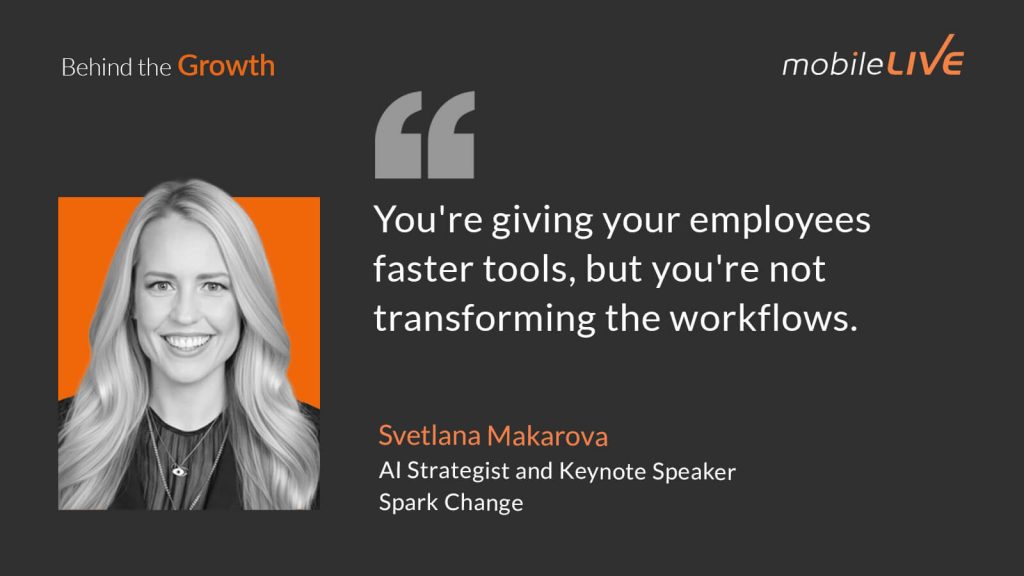
Many organizations report productivity gains from AI, but those gains often come from speeding up existing work rather than changing it. Without transforming workflows or targeting meaningful business problems, these improvements do not translate into real business outcomes like P&L impact.
“If you’re not changing anything inherently into the existing workflows, why would you expect the P&L impact?”
AI Stalls Because of People
AI initiatives often fail due to human factors rather than technical limitations. Lack of fluency, resistance to change, and misalignment between leadership and teams create friction across adoption efforts. Even issues with data and processes ultimately trace back to people.
“any adoption… the challenges can be attributed to 70 % people, 20 % data and processes and 10 % algorithms.”
AI Needs Human Judgment
AI can identify patterns and generate outputs, but it lacks the deeper insight that comes from human expertise. The ability to interpret results, connect them to business context, and make decisions remains a human responsibility.
“It’s gonna see the very common surface level patterns, but the things that you’re gonna see in that data and that next level insight… is the expertise that you bring.”
Transformation Takes Time
AI transformation is a gradual process that requires building internal capability over time. Organizations cannot expect immediate, large-scale change without first developing skills, governance, and experience through smaller initiatives.
“you shouldn’t shoot for a complete transformation within your organization within two years if you still haven’t upskilled your teams…”