Key Insights
AI Creates Impact Only When It’s Designed Around Business Outcomes
AI initiatives stall when experimentation comes before purpose. Kushal Munir describes how generative AI at Green Shield was applied to improve member care by understanding intent and helping users navigate complex healthcare journeys. He emphasizes that success came from defining business outcomes early, integrating AI directly into existing workflows, and involving business partners from the start. The model itself was not treated as the solution. When initiatives are tied to specific outcomes, such as access, experience, or productivity, they become easier to scale, govern, and defend at the executive level.
Early Governance Is What Allows AI Programs to Move Faster
In regulated environments like healthcare and insurance, AI adoption accelerates when governance was embedded from day one. Legal, privacy, security, and compliance teams were involved early and positioned as co-designers rather than late-stage approvers. A risk-based framework allowed controls to be tailored to different use cases instead of applying blanket restrictions. This reframes governance as an enabler of speed. Trust created through early structure removed hesitation across teams and made it easier to move forward with confidence.
Technology Leadership Shifts From Ownership to Value Creation
Reflecting on his leadership journey, Kushal highlights a mindset shift from being a technology owner to becoming a business value creator. While technical depth remained important, greater impact came from understanding how the business drives growth and efficiency, and how technology can simplify work and influence culture. This speaks directly to modern leadership expectations. Transformation becomes achievable when technology leaders focus less on delivering platforms and more on enabling outcomes that matter to customers, employees, and the organization as a whole.
Episode Highlights
Technology Should Improve Lives
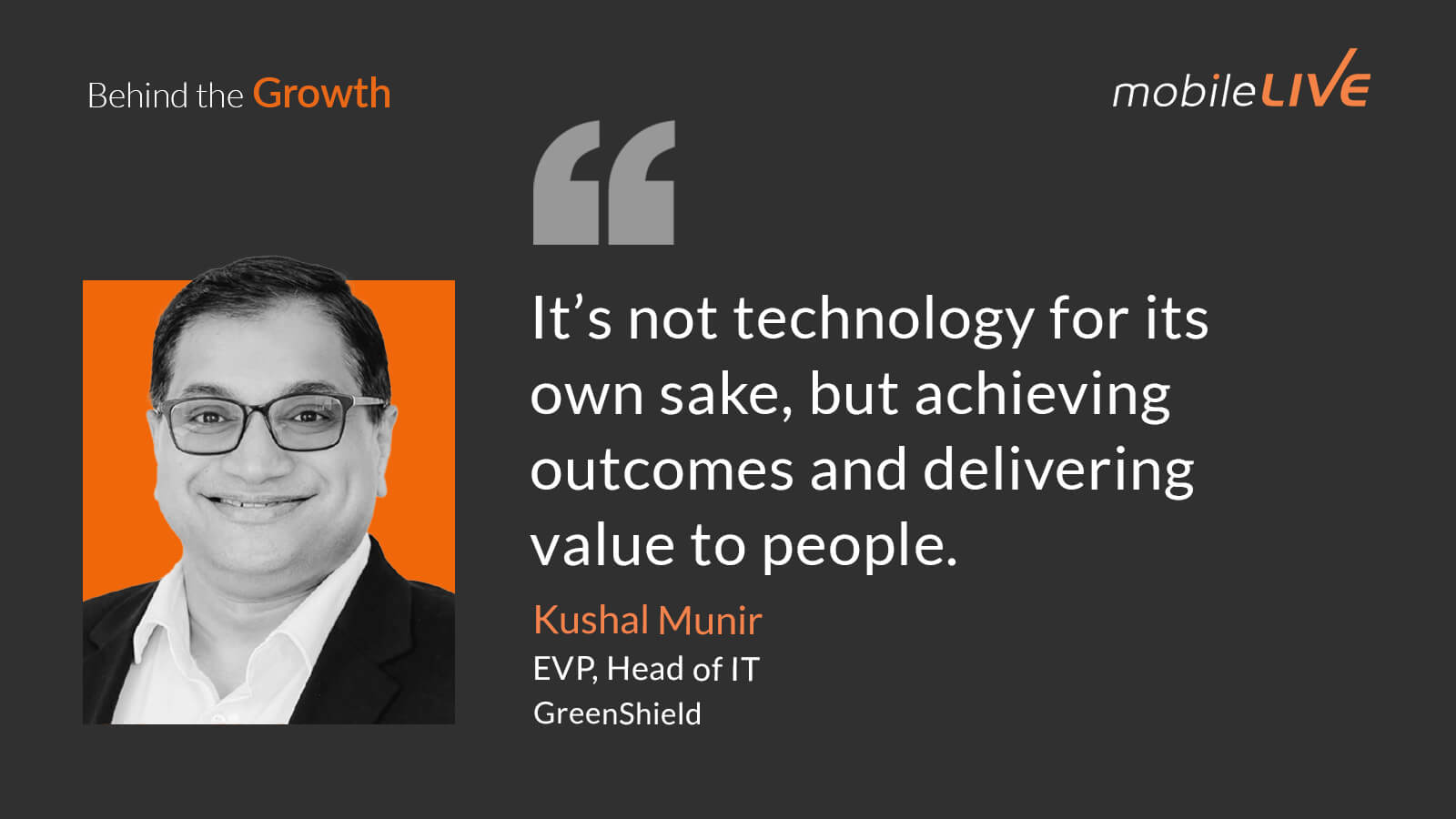
Kushal reflects on the early experiences that shaped how he views technology leadership today. Rather than framing transformation as automation or scale, he grounds his motivation in how technology affects real people. This moment sets the tone for the episode and explains why he consistently prioritizes outcomes, clarity, and impact over tools or trends.
“I’ve always been drawn to the intersection of technology and how to solve real world problems… It’s not just about automating processes, but actually impacting people’s lives.”
Why GenAI Actually Worked
When discussing a GenAI use case at Green Shield, Kushal explains why the initiative succeeded where many others stall. He points away from the model itself and toward discipline around outcomes, governance, and workflow integration. It’s a grounded explanation that cuts through hype and speaks directly to execution realities.
“What made it successful really wasn’t just the model itself, it was the end-to-end discipline around it.”
Bridging AI’s Two Extremes
Kushal clearly articulates the tension most enterprise leaders face with AI: inflated expectations on one side and fear of risk on the other. He describes this gap as one of the hardest challenges in AI execution and explains why navigating it requires intention, education, and structure—not speed for its own sake.
“On the one hand, you have a lot of hype around AI that creates very unrealistic expectations and timelines. On the other hand, you have stakeholders who also worry about risk disruption.”
Governance Builds Trust
This moment reframes governance as a trust-building mechanism rather than a constraint. Kushal explains how early investment in structure and cross-functional ownership changed how quickly the organization could move. It’s a subtle but important shift that many leaders struggle to operationalize.
“When people trust that foundation, they’re then that much more willing to move quickly.”
Clarity Is Currency
When asked about keeping teams aligned across IT, business, and operations, Kushal lands on a deceptively simple principle. He frames clarity as the most valuable asset a leader can provide in complex, fast-moving environments—especially when multiple functions are involved.
“To me, clarity is currency. That is the most important thing.”