Key Insights
Cyber risk is now a primary business risk driver
As organizations rely more heavily on technology to run core operations, the risk associated with that technology becomes the dominant risk to the business itself. This shifts cyber risk out of IT and into the center of enterprise decision-making. Leaders can no longer treat cybersecurity as a technical issue managed in isolation. It directly affects continuity, revenue, and long-term resilience. This means reframing how risk is assessed and discussed, elevating it to the same level as financial or operational risk, and ensuring it is understood and acted on across the organization.
Understanding the technology stack is critical to assessing risk
Traditional approaches to risk rely on high-level indicators like industry, revenue, or company size. In cyber risk, those signals are not sufficient. What matters is the specific technology a business uses, how it is integrated, where it sits, and how it operates. Without that level of visibility, risk cannot be accurately assessed. This introduces a more demanding but necessary requirement: deeper insight into their own technology environments. It also changes how risk is evaluated externally, particularly by insurers or partners, and reinforces the need for tighter alignment between engineering, security, and risk functions.
Cyber risk is dynamic and can be actively reduced
Unlike many traditional risks that remain relatively static over time, cyber risk is constantly evolving based on changes in technology and how it is used. This creates both complexity and opportunity. Organizations are not locked into a fixed risk profile; they can actively intervene to improve their security posture. That shift changes the role of risk management from passive assessment to continuous improvement. This means investing in capabilities that allow ongoing monitoring and adjustment, rather than relying on periodic reviews, and treating risk as something that can be shaped in real time rather than simply transferred or accepted.
Episode Highlights
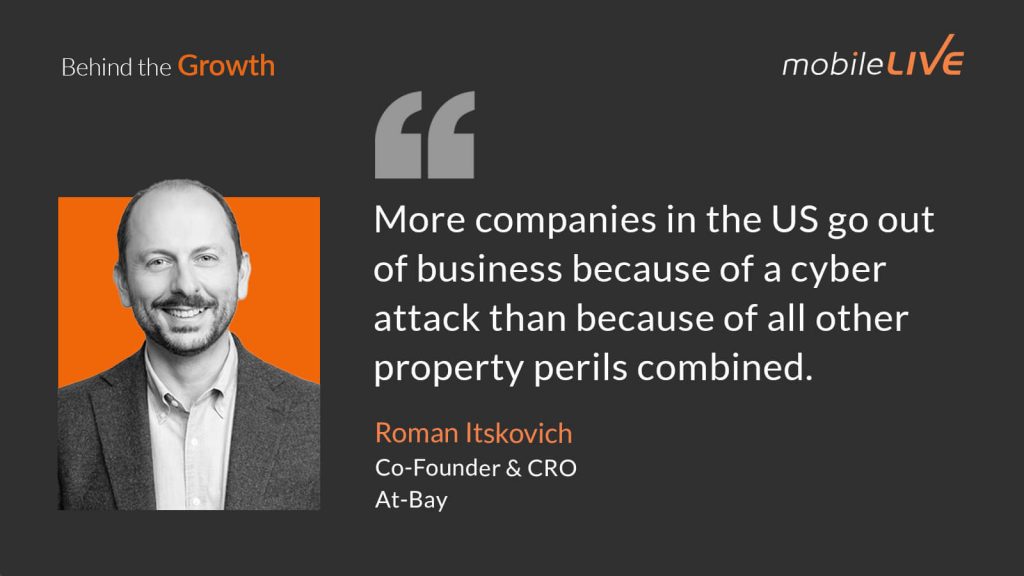
From Tech Risk to Business Risk
Roman connects the rise of cyber risk directly to how businesses operate today. As companies embed technology deeper into their core functions, the exposure tied to that technology becomes inseparable from business performance. This reframes cyber from a support function concern into something that directly impacts enterprise value and continuity.
“As businesses use more and more technology as a core part of their operation, the risk to technology becomes the main risk to business.”
A Risk That Keeps Growing
Roman challenges the idea that cyber risk will plateau or stabilize. Instead, he frames it as a function of increasing technological dependence, making its trajectory predictable. The more digital an organization becomes, the more central and unavoidable this risk becomes.
“Are business going to be using more technology in the future or less? And the answer to that is pretty clear. So this risk becomes much more significant.”
Cyber Risk Is Not Well Understood
Drawing from his experience in financial markets, Roman highlights how immature cyber risk still is compared to other risk categories. It lacks clear pricing models and consistent understanding, which creates both uncertainty and opportunity for new approaches to emerge.
“This is a completely new risk. It’s not well understood. It’s not well priced.”
Insurance Needs Technical Depth
Roman explains why traditional insurance models fall short in cyber. High-level indicators like industry or revenue don’t provide enough signal. Instead, understanding risk requires deep visibility into the actual technologies a company uses and how they are implemented.
“To understand cyber risk, you need to understand the technology that is at risk.”
Cyber Risk Is Not Static
Roman contrasts cyber risk with more stable forms of risk, pointing out how both the threat landscape and internal systems are constantly evolving. This makes cyber fundamentally dynamic—and importantly, something organizations can actively influence.
“Cyber is dynamic. So what technologies are good or bad changes over time, but also you can intervene and change your technology in a way that makes it much more secure.”